
Solo mining & toy-market adventure
MunchMiner
DIG DEEP.
MAKE TOYS.
WORK THE CROWD.
Dig into a side-view world, build a rail network, and turn the materials you bring home into toys for the evening market.
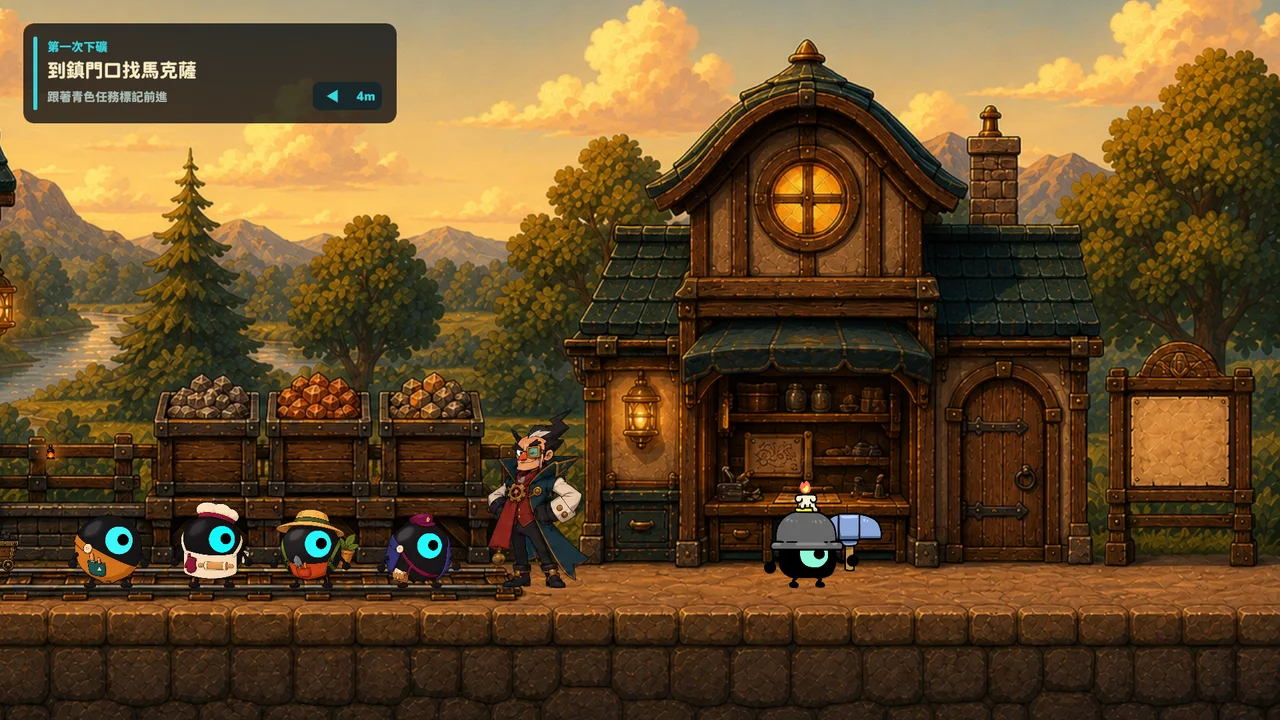
Development build. Visuals and gameplay may change.
THE PLAYING PART
ONE HAUL.
LOTS OF POSSIBILITIES.
The mine and the market are
two halves of the same plan.
-
Dig a little deeper
Dig through soil and mineral deposits, open passages and shape the route you want to explore. The tunnels you make remain when you return.
-
Connect the pieces
Build stations and gathering facilities, then connect them with powered tracks. Each station's permanent Dudu automatically carries eligible materials along a valid delivery route.
-
Make something wonderful
Use delivered minerals and creature materials in the workshop. Assemble a first sample to learn a recipe, then produce batches and select finished toys for the stall.
-
Meet the evening market
Read toy requests, guide shoppers to your stall and collect payment after their toys are ready. Unsold stock stays with you for a future market.
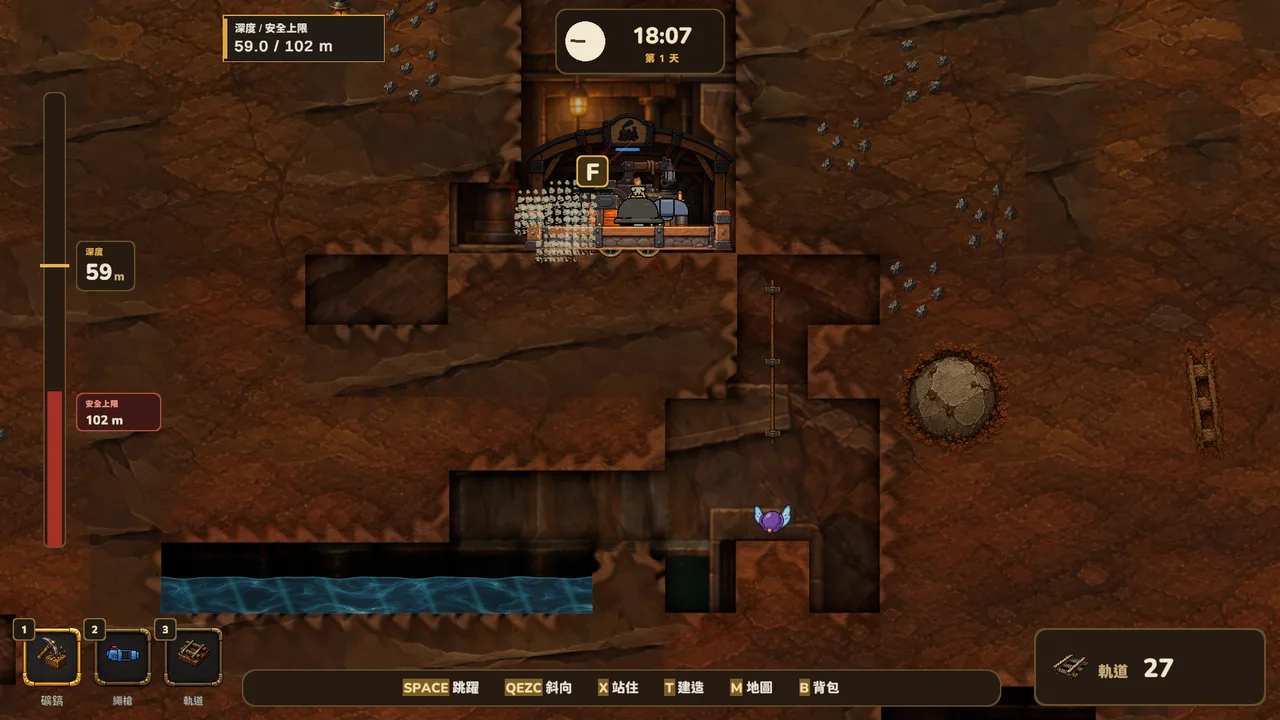
Development mine: excavation, rails and stations.
MAKE A WAY THROUGH
SHAPE THE UNDERGROUND.
Excavation changes the world you move through. Your passages, tracks and facilities persist between visits, so the next trip starts with the work you have already done.
Dig, fill and explore
Break through soil and mineral deposits, fill terrain when you need to reshape a passage, and use jumping and rope climbing to move through the side-view mine. Digging beneath a track can change it into a vertical rope, so the ground beneath your route matters.
Pack for the return
Arrange and rotate shaped items in your grid backpack to make room for minerals, creature parts and supplies. Keep an eye on the miner's moisture: it drains over time and from creature damage, and contact with molten plasma restores it.
A little more to know
Digging, filling, track work and player construction do not spend player stamina in the current design. Materials and legal placement still matter.
Development mine: connected tracks around a station.
BUILD A WORKING CONNECTION
BUILD A NETWORK THAT WORKS.
Connect freight routes to gathering facilities and an exit. Stations can pass cargo through powered relay stations, but materials reach town storage only when a cart actually arrives at a real exit.
Stations + Dudu
Each station has its own permanent Dudu cart. With cargo, power and a valid route, it loads and delivers automatically, then returns for more. It waits when empty and pauses while you arrange that station's inventory.
Minefields
These gathering facilities collect eligible ore in their service area. A station cart can collect their stock when the facilities are connected by a valid powered rail route.
Power stations
Tap electric-source regions and carry power along electrified tracks. Connected facilities share the circuit's capacity. If their combined demand exceeds supply, all consumers on that circuit pause until enough capacity is available.
Built rift exits
Construct powered rift exits to connect travel between powered exits. They are one of the mine's functional building choices, alongside stations, minefields and power stations.
What happens while you are in town?
The mine keeps producing and transporting while you are in town and while game time advances through rest or a market. This is an active game-world clock; there is no offline income or offline time progression.
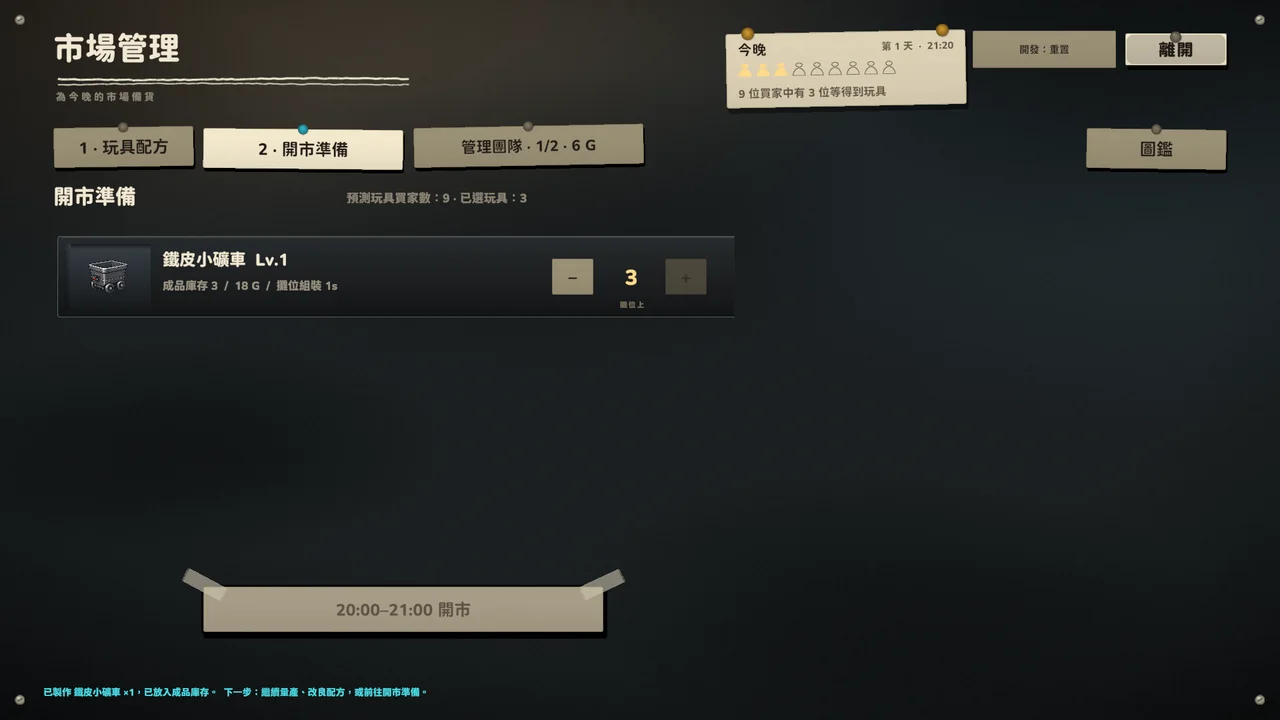
Finished toy stock selected before opening the market.
FROM RAW MATERIAL TO SOMETHING PLAYFUL
MAKE TOYS. STOCK THE STALL.
The workshop turns the materials you bring home into finished stock. Your choice of recipes gives each expedition a purpose: gather what the next batch needs, rather than sell raw ore for money.
A first sample teaches the recipe
Time the assembly action while the needle is in the gold zone. Three successful steps complete the sample and learn the recipe. A miss does not spend materials; the ingredient set is charged when the sample succeeds.
Once learned, the recipe skips that sample minigame and supports batch quantities. Finished toys can then be selected for an evening market.
Two kinds of lasting progress
Recipe upgrades change the value of newly made stock; existing toys keep their original quality. Separately, permanent building research at Marksa's town workshop applies to every existing and future building of the same kind.
Higher-level stations and minefields handle higher-level materials, linking workshop research back to your underground network.
ON THE WORKBENCH
- Iron Toy Mine Cart 2 Iron → 1 toy
- Wind-up Frog 1 Iron + 1 Copper → 1 toy
- Crystal Kaleidoscope 1 Copper + 1 Crystal → 1 toy
A few mineral-only recipes to try. Each ingredient set makes one toy; other recipes also use creature materials.
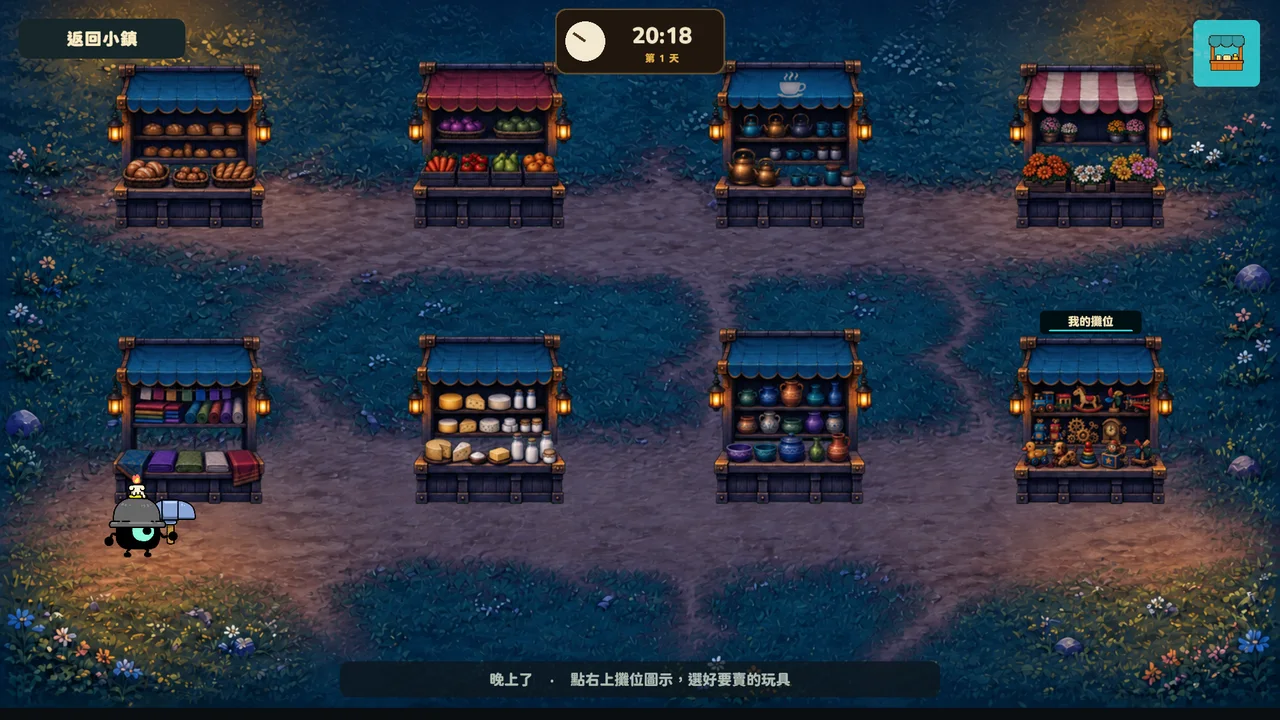
The evening market before customers arrive.
THE OTHER HALF OF THE ADVENTURE
SELL A LITTLE MISCHIEF.
An evening market is an active shift. You move through the stalls, meet customers and keep service moving while their patience runs down.
Choose what to bring
Select finished toys before opening. Shoppers show a request for a specific toy, so a varied stock gives you different requests to serve. Unsold toys remain in your inventory after the shift.
Guide, make, collect
Recruit a shopper and lead them to your stall. On-site making begins after their arrival, with one toy prepared at a time. Handover and payment are separate: return to the customer and collect their payment with F before patience expires.
Find your rhythm
Assign a Maker and Promoters to help with production and recruitment. Time a toy-horn promotion to reach more shoppers; a blast that is too loud can drive them away. At settlement, sales, tips and attending staff's wages determine the shift's profit.
How does the market grow?
Successful sales feed Marksa's Evil Broadcast Tower. A stronger signal attracts more humans, and themed markets give you a reason to prepare particular toys. More stock, better service and the next mining trip become parts of the same plan.
A WOULD-BE EVIL EMPLOYER
MARKSA HAS
A PLAN.
Conquer the world. Accidentally make the village a better place.
Work for Marksa, whose grand schemes keep helping the people around him. As the village's red-helmet miner, you turn underground discoveries into something they want to take home.
TAKE A CLOSER LOOK
DOWN THE MINE.
OUT TO THE MARKET.
Screens from development builds.
The world is still taking shape.
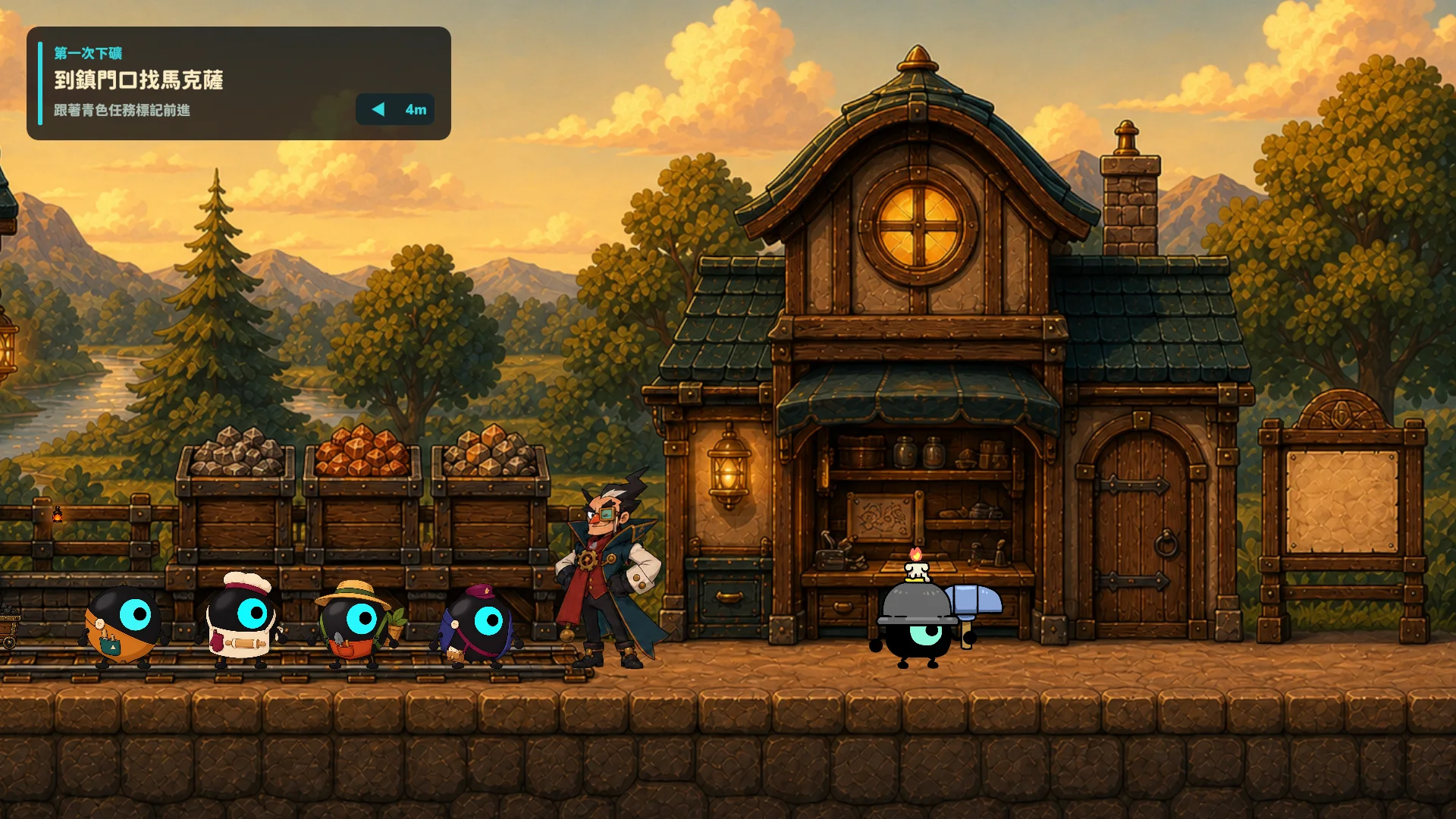
Your town between expeditions
Look for the red helmet beside Marksa and the workshop behind them. Town connects the mine's delivered materials with crafting, research and preparations for the evening market.
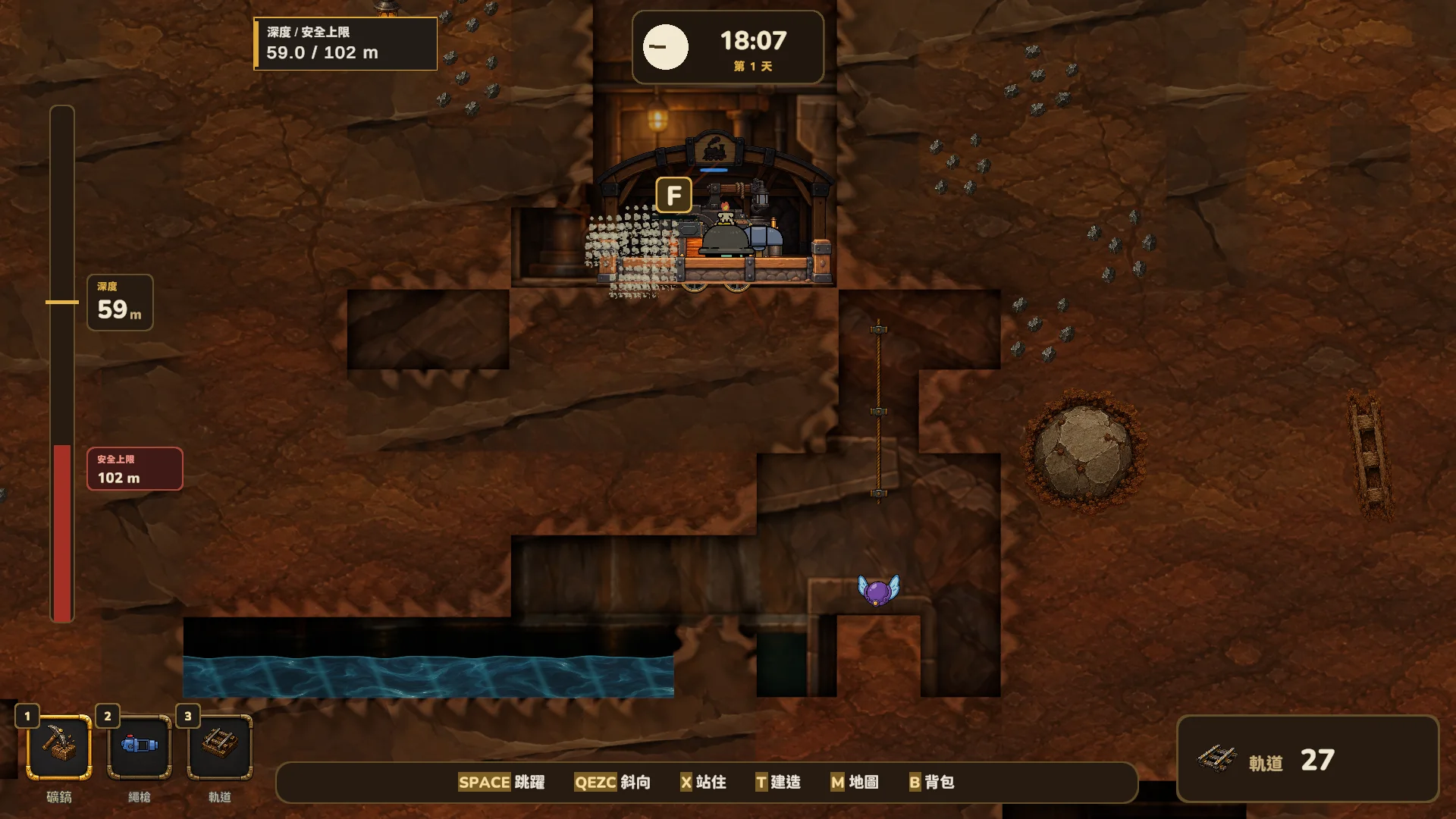
Trace an underground route
The station anchors the visible track network. Trace the horizontal rails and vertical ropes through excavated passages to see how your route and your freight network share the underground space.
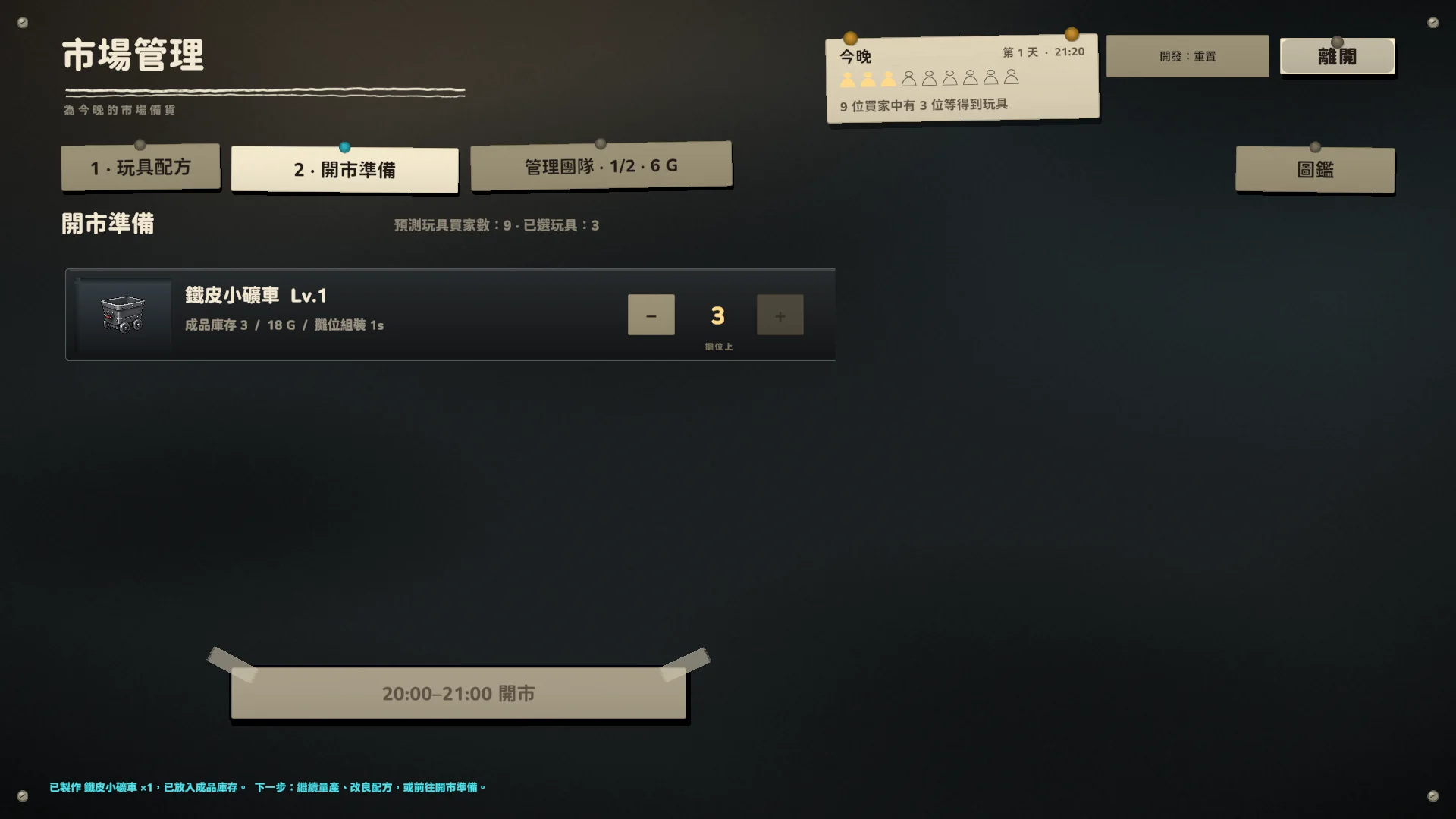
Choose the toys for your stall
The stock panel shows finished Iron Toy Mine Carts ready for selection. This is the step after workshop production: decide which finished toys to offer before opening the market.
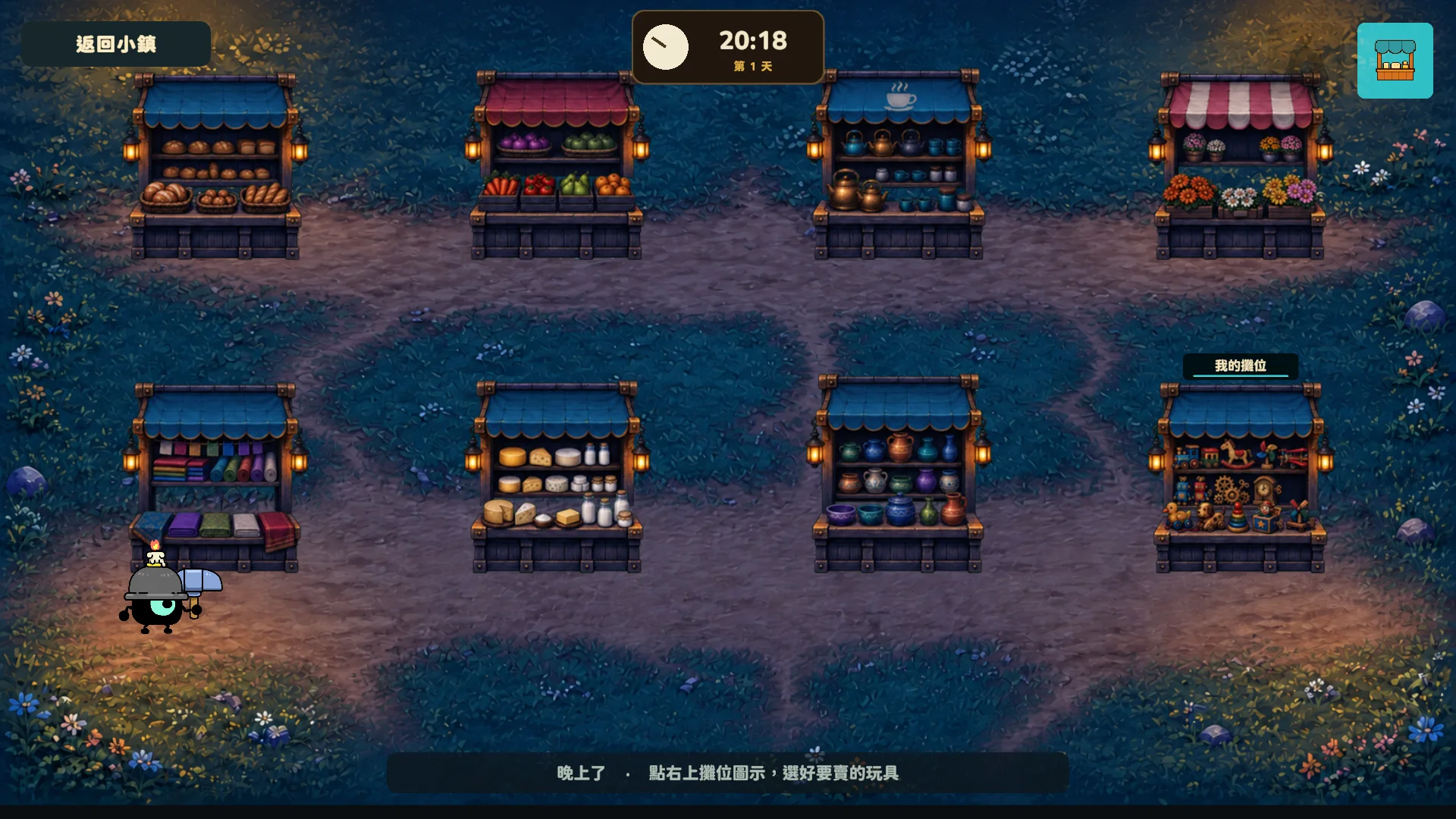
From preparation to a busy shift
The toy stall sits at the lower right of the two-row market. This scene was captured before customers arrive; during a shift you move between shoppers and your counter to recruit, hand over toys and collect payment.
BEFORE YOU HEAD UNDERGROUND
GOOD TO KNOW.
Information checked .
What kind of game is MunchMiner?
A side-view 2D mining and toy-market adventure. Excavate a persistent mine, connect powered facilities, bring materials home, craft toys and work the evening market.
Can I play solo?
Yes. The current game is built for offline single-player play with one red-helmet miner.
Does the mine reset when I return?
No. Your excavated terrain, tracks, facilities and cargo persist. Mine production and physical freight continue as the in-game clock advances in town, rest or a market. There is no offline time progression or income.
When can I play?
MunchMiner is in development. Release timing, platforms and availability will appear here when confirmed.
Where can I ask about the game?
Say hello at info@fluffybrown.com for questions, press or publishing enquiries.